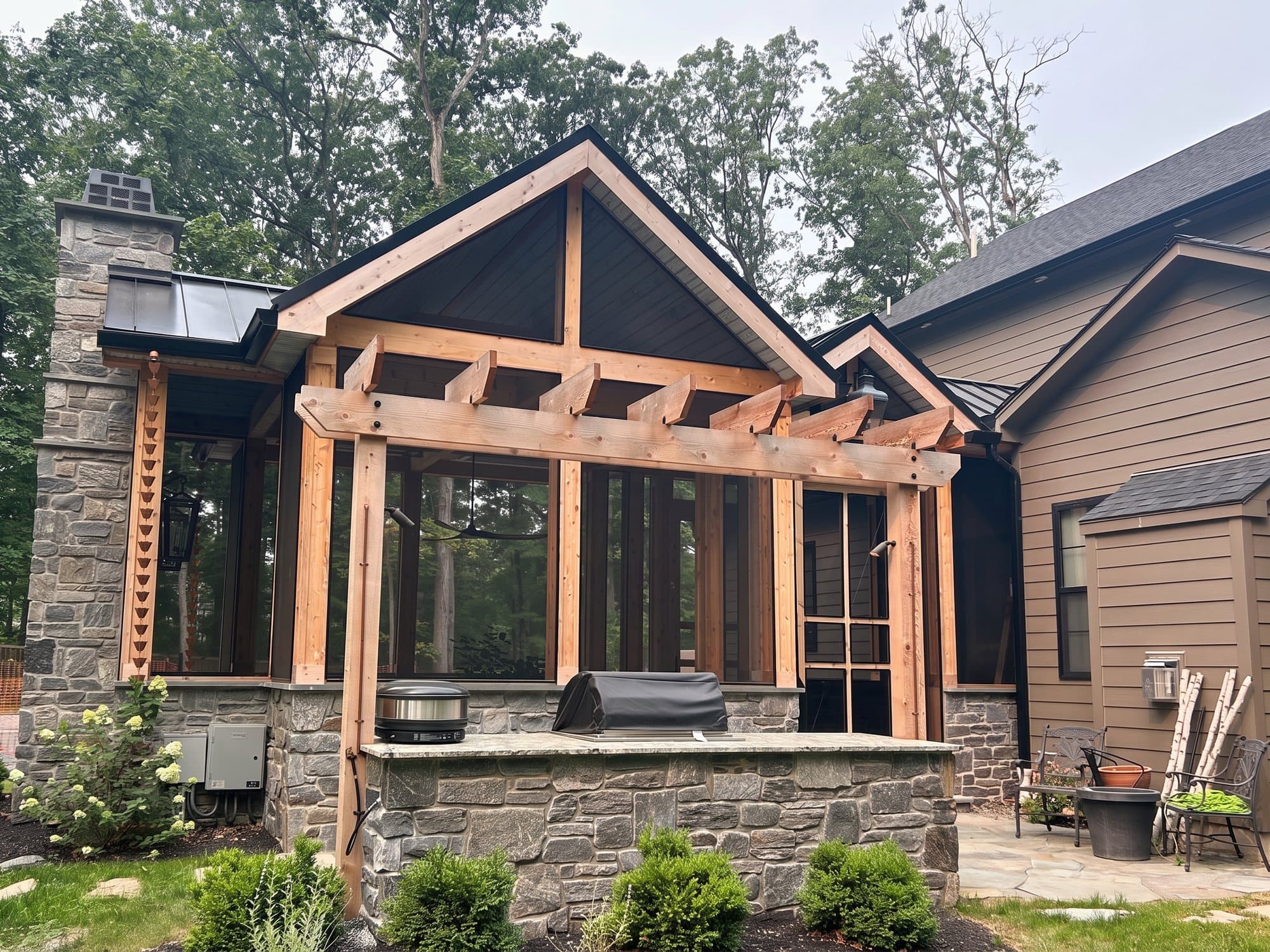
Pergolas: what to know
Pergola, pavilion, gazebo, or arbor?
- Pergola: posts and beams with an open roof of rafters or slats. It gives partial shade and frames an outdoor room.
- Pavilion: a similar frame with a solid roof that keeps rain off.
- Gazebo: a freestanding roofed structure, often with six or eight sides.
- Arbor: smaller, often over a path, gate, or bench.
Pergola materials
- Pressure-treated pine: lowest cost. Needs stain or paint to look its best.
- Cedar: resists rot on its own and looks good bare or stained. Costs more than pine.
- Vinyl or PVC sleeves: a low-upkeep shell over a wood or metal core.
- Aluminum: low upkeep and a modern look. Often used for louvered roofs that open and close.
- Fiberglass: strong enough for long spans and low upkeep. Usually costs the most.
Freestanding or attached
A freestanding pergola stands on four or more posts and can go anywhere in the yard. An attached pergola fastens one side to the house with a ledger, like a deck, and needs the same bolts and flashing at the house wall.
Footings and wind
A pergola catches wind, and a canopy or tight slats make it catch more. Posts should sit on concrete footings below frost depth, with metal post bases that hold them down.
A pergola can go on an existing deck only if the deck frame can carry the posts. That often means adding blocking or footings under the deck.
How much shade you get
Open rafters give light, moving shade. Slats set closer together give more. For real cover from sun or rain, add shade cloth, a retractable canopy, a louvered roof, or climbing plants such as wisteria or grapes.
Permits
Many Pennsylvania townships require a permit for a pergola, most often when it is attached to the house or built on a deck. Some exempt small freestanding ones. Zoning setbacks from property lines apply either way, and HOAs may add rules. Check with your township or borough before you build.