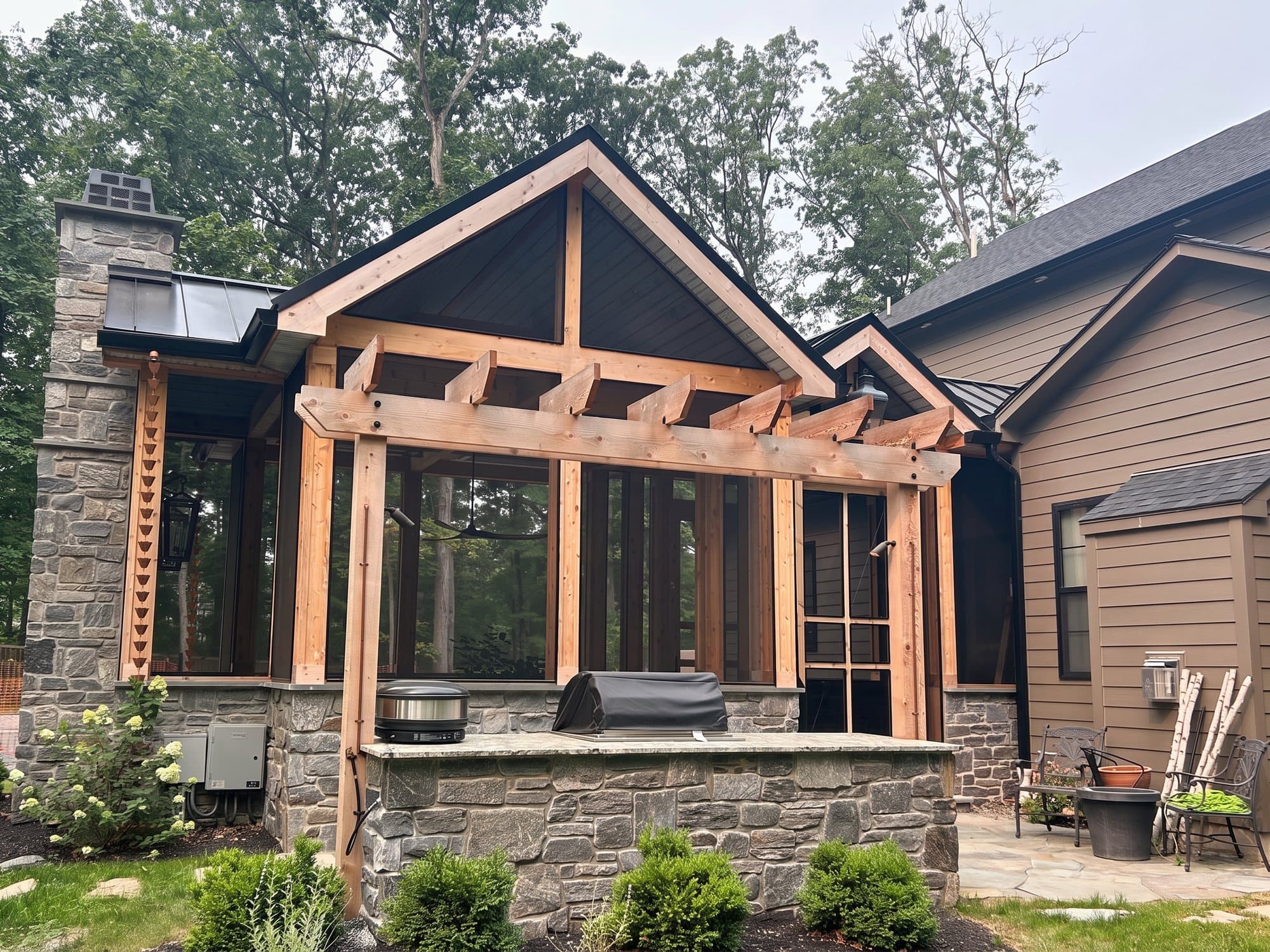
Outdoor kitchens: what to know
What goes into an outdoor kitchen
Most start with a built-in grill and counter space, then add what fits the way you cook and host:
- Side burner, pizza oven, or smoker.
- Sink with running water.
- Refrigerator or ice maker rated for outdoor use.
- Doors and drawers for storage.
- A raised bar counter for seating.
Layout
Common shapes are a straight run along a wall, an L, a U, or a freestanding island. Leave counter space on both sides of the grill for platters and tools, and keep the cooking area out of the main path between the house and the yard.
Think about smoke. Set the grill where the wind usually carries smoke away from doors, windows, and seating.
On a patio or on a deck
Stone and block kitchens are heavy, so most sit on a concrete slab or pavers on a compacted base. A kitchen on a deck needs framing designed for that weight, and lighter frames and finishes.
Grills built into a counter need the clearances and, where the maker calls for it, the insulated jacket listed in the grill's instructions. Wood framing should never surround a built-in grill.
Frames, finishes, and countertops
Kitchen islands are usually framed with concrete block, steel studs, or aluminum, then finished with stone veneer, brick, or stucco.
- Granite: dense and hard, and holds up well outdoors. Needs sealing now and then.
- Concrete: can be cast in any shape. Needs sealing and can develop hairline cracks.
- Tile: low cost, but grout joints stain and can crack as they freeze and thaw.
- Quartz: many makers don't approve it for outdoor use, because sun can discolor it.
Gas, water, and power
- Gas: a natural gas line from the house means no tanks to refill. Propane tanks need a ventilated spot inside the cabinet. Gas lines need a licensed installer and usually a permit.
- Water: a sink needs a supply line and a drain, and both must be drained or shut off before winter.
- Power: outdoor outlets need ground-fault (GFCI) protection and covers that close over a plugged-in cord.
Pennsylvania winters
- Drain water lines and the sink before the first freeze.
- Use only refrigerators and appliances rated for outdoor use. Indoor models fail in the cold and heat.
- Cover the grill and appliances, and keep snow and ice melt off stone and grout.
Shade and cover
A pergola gives partial shade and frames the kitchen. A solid roof lets you cook in the rain, but a grill under a roof needs a vent hood and the overhead clearance the grill maker lists.
Permits
A counter on an existing patio may need no permit, but gas lines, electrical work, and any roof over the kitchen usually do. Zoning setbacks can apply to large built-ins. Check with your township or borough before you build.